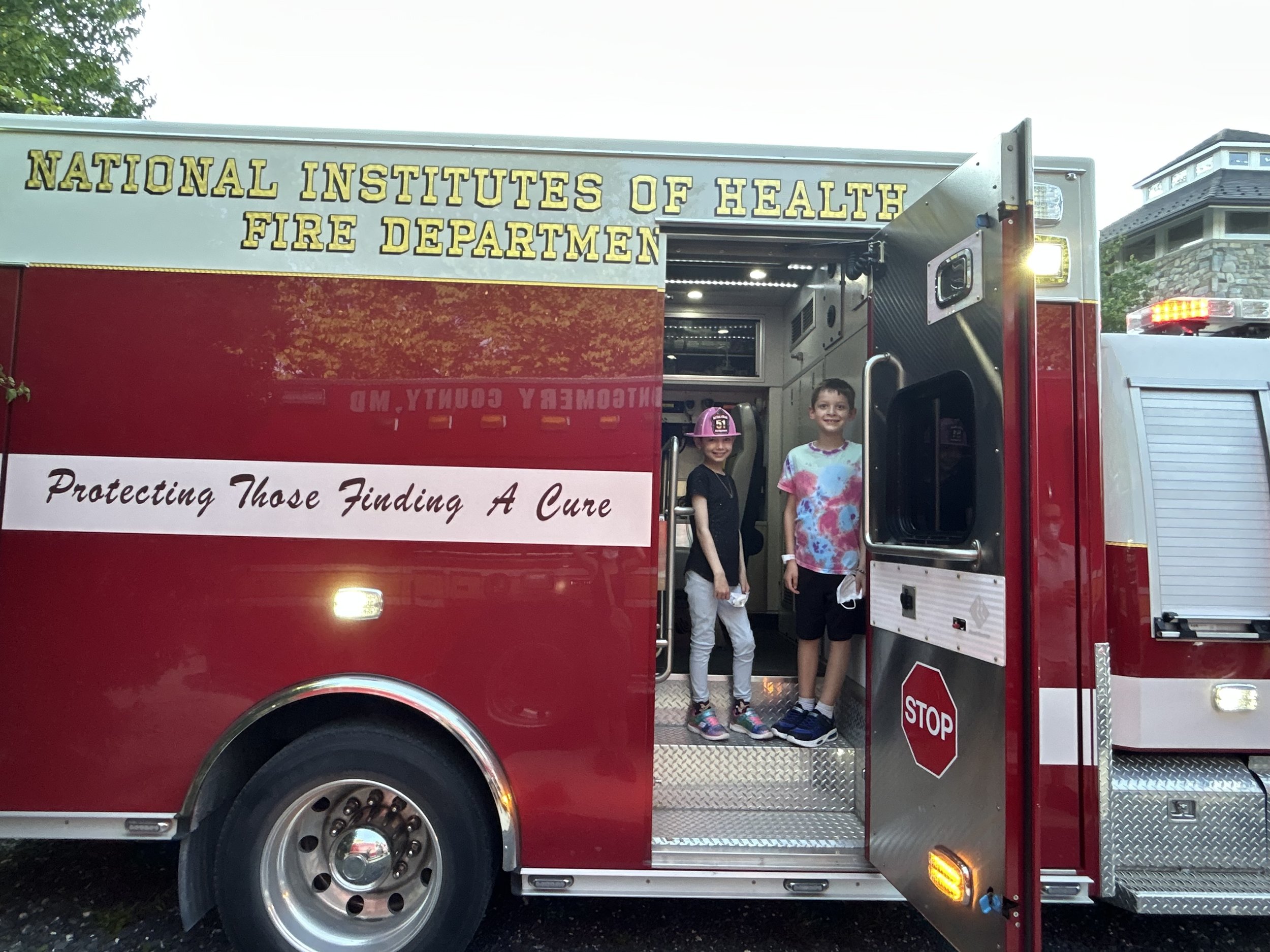
Juliana L.
Our daughter Juliana is now 9 years old, as an infant she battled skin and health issues. We had taken her to all types of specialists to treat her symptoms but never understood her underlying issue. When Juliana started Kindergarten, she was getting very sick frequently and was brought to the ER several times for pneumonia. In the fall of 2023, her pneumonia returned and wasn’t improving. She was admitted to the hospital and went for extensive bloodwork. The medical team found her white blood cell counts were extremely low and that she was “severely neutropenic” (low white blood count). She was immediately referred to a hematologist/oncologist and immunology.
For the next 2.5 years Juliana went for countless blood work, doctors’ appointments, and infusions. Her immunologist felt like there was something more to this than neutropenia and started genetic testing. The testing revealed that Juliana has a genetic defect, PGM3, a very rare disorder that causes neutropenia, skin changes, allergies, etc. All the things that Juliana battled with since she was an infant were symptoms of this disease.
The local children’s hospital connected us to the National Institute of Health in Washington D.C. as they were studying this rare disease and had an active research study. Juliana became a participant in this study, underwent extensive testing, imaging, and followed by the team at NIH for over a year. There was no improvement in her cell counts or symptoms and the recommendation was a bone marrow transplant (BMT). A BMT is a lengthy process, it involves chemotherapy, immunosuppression of your weak immune system to ultimately replace it with a healthy immune system. Our entire family did genetic testing to see if we were a match and unfortunately none of us were a match.
Through this testing, the medical team discovered that her younger brother, Anthony, now 7 years old, also has the PGM3 disease. Our focus was on Juliana, but Anthony also battled skin issues, allergies, and asthma at a milder level.
We received a call in January 2025 that the Bone Marrow Registry contacted NIH that they have a 10/10 perfect match for Juliana. We were to get on a plane to the NIH in a few weeks to start pre-transplant testing in preparation for her BMT. We were excited for Juliana to have a chance at a healthier life, but also extremely nervous and upset about separating from our family. It was a difficult journey, but Juliana had a great response to her bone marrow transplant. She was able to go home earlier than anticipated and was discharged after 87 days of care at the NIH. We were so excited to be reunited as a family! Both Juliana and Anthony continue to have many doctors’ appointments, bloodwork, and are medically stable. They are both participants in the PGM3 deficiency study at NIH with the goal to improve the symptoms of their disease and help others that are impacted.